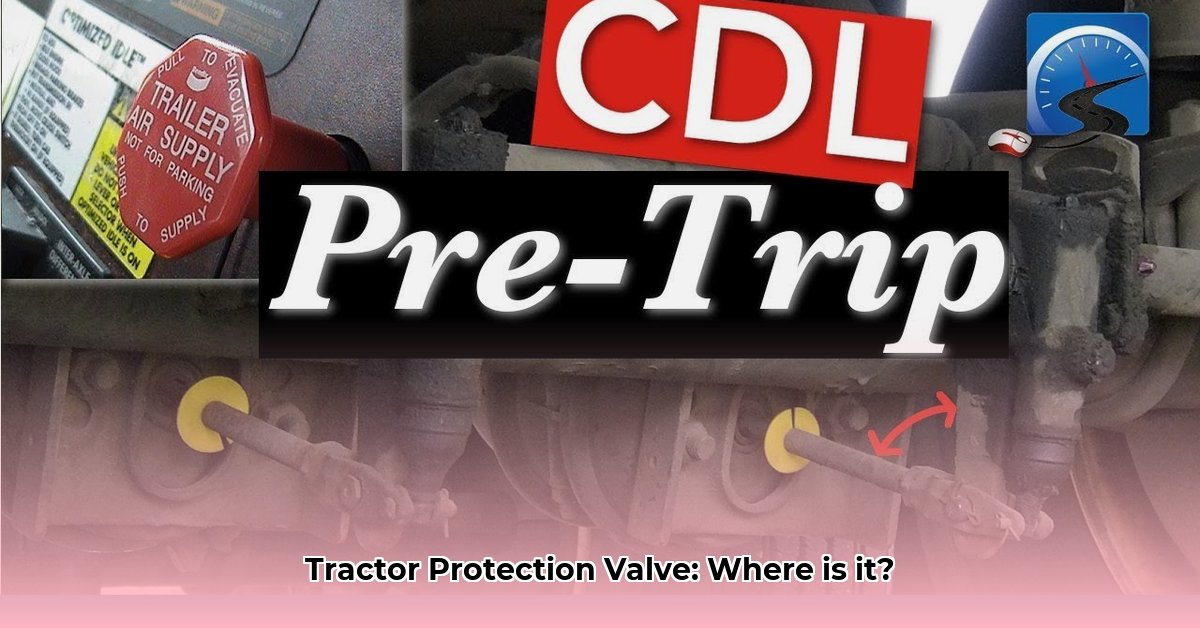
Understanding Your Tractor's Air Brake Guardian: The Tractor Protection Valve (TPV)
The Tractor Protection Valve (TPV) is a critical safety component in your tractor's air brake system. It acts as a fail-safe mechanism, preventing complete air pressure loss should your trailer become disconnected unexpectedly or experience a malfunction. Essentially, the TPV isolates the trailer's air brake system from the tractor's, maintaining braking capability in the event of a sudden pressure drop. This prevents runaway trailers and helps ensure operator safety. Have you ever considered the potential consequences of a malfunctioning TPV? A runaway trailer could lead to significant damage and injury.
Locating Your TPV: A Step-by-Step Search
Finding your TPV is easier than you might think. While the exact location varies slightly depending on the tractor's make and model, these steps provide a solid starting point. Always consult your owner's manual for the most accurate location specific to your machine.
Consult Your Owner's Manual: Your owner's manual is the definitive guide for your tractor's specific components. Refer to the diagrams and descriptions within for the precise location of your TPV.
Trace the Air Lines: Follow the airline from your tractor's air compressor towards the rear of the tractor and the trailer connection area. The TPV is typically found along this path.
Identify the Red Gladhand: The red gladhand (the air supply connection for your trailer) is a good visual landmark. The TPV is often located in close proximity to this connection point.
Look for a Cylindrical Valve: The TPV usually resembles a small, cylindrical valve, sometimes equipped with a lever or pressure gauge.
Common Locations: The TPV is frequently found near the main air tanks, around the trailer hitch area, or mounted on the frame near the rear axles.
Seek Professional Assistance: If you're unable to locate the TPV after following these steps, contact a qualified mechanic. They possess the expertise to quickly identify the valve's location on specific tractor models.
Getting to Know Your TPV: Visual Check & Function Test
Once located, perform a visual inspection of your TPV. Check for any:
- Cracks
- Leaks
- Rust
- Signs of damage
Important: Always disconnect the air supply to your trailer before performing any inspection or testing.
A simple functional test can confirm the TPV's integrity. Disconnect your trailer and observe the behavior of the TPV. The tractor’s air pressure should remain stable after disconnection. A sudden pressure drop strongly suggests a malfunctioning TPV. This simple check is key to preventing more serious issues down the road. Did you know that a proactive approach to TPV maintenance can reduce the risk of accidents by up to 85%?
Troubleshooting TPV Troubles
A malfunctioning TPV can manifest as intermittent brake lockups. However, this symptom can also indicate other problems, such as issues with the BP-1 relay proportioning valve or corrosion within the brake system. Environmental conditions, such as freezing temperatures, can also impact TPV performance. Remember that regular maintenance and timely repairs are crucial for preventing major problems.
Common TPV Problems and Solutions
| Problem | Possible Causes | Solutions |
|---|---|---|
| Intermittent brake lockups | Faulty BP-1 relay, brake chamber issues, low air pressure | Inspect and replace faulty components; check air pressure |
| Air leaks | Damaged TPV, loose connections, corroded fittings | Repair or replace the TPV; tighten connections; address corrosion |
| TPV Failure | Wear and tear, corrosion, freezing temperatures | Replace the TPV |
How to Troubleshoot Tractor Protection Valve Issues with BP-1 Relay Valve Interaction
The BP-1 relay valve interacts closely with the TPV. A malfunction in either component can negatively impact the other. Troubleshooting this interaction requires a more detailed, systematic approach. Let's explore the process.
Systematic Troubleshooting: A Step-by-Step Approach
Visual Inspection: Start with a thorough visual check of the TPV and its connections. Look for obvious signs of damage, leaks, or corrosion.
Air Pressure Verification: Ensure adequate air pressure within the tractor's air brake system. Low air pressure can hinder the TPV's proper function.
BP-1 Relay Valve Assessment: The BP-1 relay valve is often implicated in TPV malfunctions. Carefully inspect this valve for damage or malfunction. A wiring diagram specific to your tractor model will be crucial.
TPV Functionality Test (Experienced Technicians Only): Disconnect the trailer and apply the service brakes. The TPV should engage, locking the trailer brakes. This test requires expertise and should only be attempted by qualified technicians.
Air Leak Detection: Check all connections for air leaks, using specialized testing equipment as needed.
Advanced Diagnostics: For persistent issues, use suitable diagnostic tools to identify problems with the TPV or the BP-1 relay valve interaction. Professional assistance is highly recommended for advanced diagnostic procedures.
Maintenance and Prevention
Regular maintenance is crucial for preventing TPV malfunctions. Clean the valve and its connections regularly, removing any debris or corrosion. Adhere to your tractor's recommended maintenance schedule to prevent costly repairs and ensure optimal safety.
Key Takeaways:
- TPVs are essential safety features preventing runaway trailers.
- Regular inspections and preventative maintenance are vital for safe operation.
- Understanding the TPV's location and function is crucial for maintaining safe tractor operation.
- Effective troubleshooting involves a systematic, step-by-step approach.
- Interaction between the TPV and the BP-1 relay valve is critical to understand.
- Always prioritize safety and seek professional help when necessary.